Streaming didn't just grow dubbing. It changed who controls it, how fast it moves, and how little room there is to get it right.
I started adapting before streaming existed as a force in this industry. The workflow was different. The timelines were different. The expectations were different. The relationship between studios and adapters was different too.
What Netflix and the streaming era brought wasn't simply more work. It brought a new set of pressures, a new set of standards, and a new kind of scrutiny that has reshaped what it means to do this job at the highest level.
The Timeline Problem
Of everything that changed, the deadlines changed most. And not in a direction that serves the work.
Turnarounds were already fast before streaming. This was never a slow-paced craft. But there's a particular pressure in being asked to deliver at the highest possible standard in the shortest possible window. What used to take a week now takes days. The pipeline doesn't negotiate.
The logic is understandable from a production standpoint. Platforms release simultaneously across dozens of markets. Schedules are locked months in advance. But the adapter, working alone, without a team, without the buffer of a writer's room, absorbs all of that pressure at the end of the chain.
And because the adapter is rarely on set, rarely in the studio, rarely visible to the people making the decisions, it's easier for that pressure to land without acknowledgment. I've had notes questioning specific choices with no context.
Why did you adapt it this way?
Because it works. Linguistically, rhythmically, performatively.
But that answer requires a conversation. And conversations take time the schedule doesn't allow.
I'm not looking for a medal. I do the work because I love the craft. But the disconnect between what's being asked and what's being given back is real, and it's worth naming.
Before and After Squid Game
There's a before and after Squid Game in this industry. Not because of the show itself, though it was extraordinary, but because of what happened to its English dubbing.
The English dubbing was widely criticized. Viewers who watched both versions pointed to lines that felt loose, choices that drifted from the original, moments where the adapter seemed to be rewriting rather than adapting. The conversation spread beyond the usual dubbing circles and into mainstream discourse. And Netflix was watching.
What followed was a tightening around a specific principle: adapt, don't rewrite. Stay faithful to the source. Don't take authorial liberties with someone else's dialogue. It's a principle I agree with. It's also, at times, a thin line. Anyone who has adapted from Korean or Turkish into English knows that some sentences don't travel cleanly. The structure is different. The emotional register lands differently. Some degree of interpretation is always necessary.
But Squid Game made that conversation explicit in a way it hadn't been before. Suddenly the bar wasn't just quality. It was fidelity. And that shift affected every production that came after it, including everything I've worked on since.
The Standards That Followed
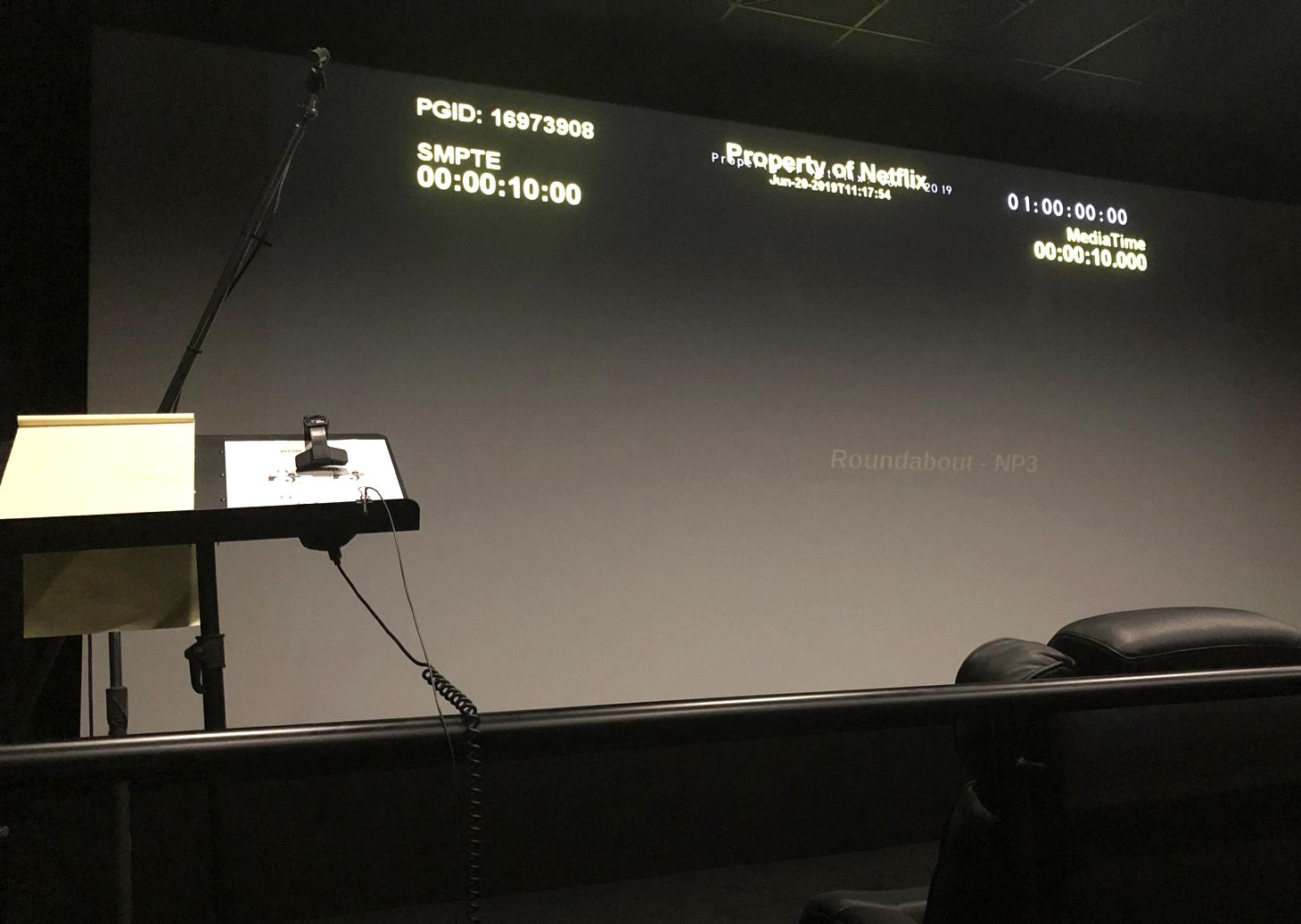
Netflix developed its own dubbing guidelines. Detailed, specific, sometimes rigid. I've lived with them across dozens of projects, and depending on the day, they help or they constrain.
The guidelines push you toward precision. They ask you to justify every departure from the source, to keep the emotional truth of the original intact, to prioritize the writer's voice over your own instincts as an adapter. That's not wrong. That's the job, done properly. When the guidelines function as a framework, they make the work better.
Where they become harder is when they function as a checklist applied without context. Dialogue is alive. It has rhythm, breath, timing. A guideline that looks correct on paper can produce a line that no actor wants to say. The adapter's job is to navigate between the source and the speaker, and sometimes those two things are in tension in ways a rulebook can't fully anticipate.
But on balance, I'd take the standards over the absence of them. They raised the floor. They forced conversations about quality that this industry needed to have. They made it harder to hide behind vague competence.
Who's Adapting Now
The streaming boom brought more content. More content brought more demand for adapters. And more demand brought in people who might not have come to this work otherwise.
I watch everything in the original language, so I'm not well-placed to judge the quality of other adapters' work directly. But I've noticed something about who's entering the field. Actors between roles. Directors between projects. People who've spent time in recording studios and assume that proximity to dubbing is the same as knowing how to adapt dialogue.
It's not. Being in a recording studio isn't the same as knowing how to write for one.
An adapter doesn't take roles. Doesn't need to live in the city where recordings happen. Works alone, for hours, inside a discipline that requires its own specific set of skills: linguistic, rhythmic, dramatic, technical. It took me years to understand all the layers of this craft. The idea that it can be picked up as a side activity between other things is a little disheartening.
Competition is competition. The market decides. But there's something worth protecting in the idea that adapting dialogue for screen is a craft in itself. Not a fallback. Not a hobby. Not a shortcut to staying busy between more visible work.
"Adapt, don't rewrite. Stay faithful to the source. It sounds simple. It's one of the hardest things to do well."
What It Means to Work Today
I've adapted over four hundred episodes and films across twelve years. The industry I work in now is not the same one I entered. The volume is higher, the scrutiny is sharper, the timelines are tighter, and the margin for error has narrowed considerably.
That's not entirely a bad thing. The pressure to be better is also a pressure to grow. The standards that feel constraining on a difficult day are the same standards that make this work matter. Audiences notice dubbing now in a way they didn't ten years ago.
What I'd ask for is a recalibration of one thing: the relationship between expectation and recognition. Not applause. Not credit. Just the understanding that the adapter at the end of the chain, working alone, with no safety net, against a deadline that doesn't move, is doing something that requires real skill. And that the work is better when that's acknowledged, even quietly, even just in the form of a little more time.
Good dubbing is invisible.
The work behind it isn't.